
Outback Edge: The Ultimate Guide to Knives, Knife Rolls, and Field Transport
18th Sep 2026
Whether you are processing a fresh catch on the boat, prepping cuts in a commercial kitchen, or field-dressing game under the open sky, your blade is your most important tool. But a sharp, high-performance knife is only as good as the steel it’s made from—and the system you use to transport and protect it.
At FISH Outback Stores, we supply trade workers, outdoorsmen, and fishing enthusiasts across Australia with work gear that handles harsh conditions without compromising performance. In this guide, we dive deep into selecting the right blades for filleting, butchering, and skinning, along with the roll systems needed to keep your tools safe and razor-sharp on the go.
1. Choosing the Right Knife for the Task
Not all blades are created equal. Matching the right blade geometry and edge profile to your specific workload speeds up processing time, improves cut quality, and reduces fatigue.
Filleting & Fishing Knives
When working with fish, flexibility and edge retention are key.
- Serrated vs. Smooth Flex: A flexible fillet blade conforms to the spine and ribs of the fish, allowing maximum yield with minimal wasted meat. Smooth blades excel on clean, precise cuts through soft flesh, while serrated flex blades cut cleanly through tough scales and bones.
- Ergonomic Grips: Saltwater and freshwater environments get slippery. Outfitted options like SICUT and Bubba feature non-slip, textured handles engineered for secure handling even when wet.
Butchering & Skinning Knives
Field dressing and carcass processing demand heavy-duty steel capable of taking a punishing edge.
- Curved Skinning Knives: Skinners feature a swept tip designed to glide between the hide and flesh without puncturing underlying meat. High-carbon steel blades (such as classic Dexter Russell or Green River models) offer incredible sharpness and are easy to touch up in the field.
- Boning & Butcher Knives: Stiff boning knives provide leverage around joint tissue, while curved butcher knives give you the sweeping sweep needed for breaking down large primal cuts.
Pocket Knives & Multi-Tools
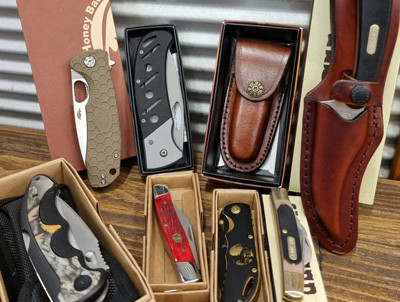
For daily tasks around the campsite or workshop, traditional folding pocket knives like Old Timer and Uncle Henry offer time-tested durability with multi-blade versatility (clip points, spey blades, and gut hooks).
2. Steel Selection: Stainless vs. High-Carbon
When selecting your work gear, understanding the metallurgy ensures you choose a knife suited to your maintenance routine and environment:
|
Feature |
Stainless Steel (e.g., 7Cr17MoV, 8Cr13MoV) |
High-Carbon Steel (e.g., Green River Traditional) |
|
Corrosion Resistance |
Extremely high; ideal for marine & wet conditions |
Requires maintenance (oil) to prevent patina/rust |
|
Edge Retention |
Moderate to long-lasting; tough against chipping |
Holds an ultra-sharp edge for extended periods |
|
Ease of Sharpening |
Requires quality stones/guided systems |
Very easy to hone quickly in the field |
|
Best For |
Saltwater fishing, boat decks, wet environments |
Professional butchering, skinning, dry field work |
3. Why You Need a Dedicated Knife Roll System
Throwing sharp blades loosely into a toolbox or duffle bag damages the edge, degrades blade alignment, and poses a severe safety hazard. A heavy-duty knife roll or canvas wrap solves these issues by securing each tool independently.
Key Benefits of Quality Knife Rolls:
- Edge Protection: Keeps blades from striking against each other, preserving your polished edge.
- Mobility & Compact Storage: Heavy-duty touch tape or buckle closures allow full multi-piece knife packs to roll down tightly into a compact unit for transit.
- Quick Identification: Australian-made marine PVC knife rolls featuring clear front panels allow you to spot the exact tool you need at a glance without unrolling every blade.
- Water & Wear Resistance: Heavyweight materials like 680GSM Ripstop PVC and Australian canvas keep water, moisture, and road grime away from your blades.
4. Complete Knife Packs: The Ready-to-Go Option
For professionals, apprentices, and outdoor enthusiasts who need a complete setup right out of the box, all-in-one knife packages offer balanced versatility.
- The Fisherman’s Setup: Typically pairs a flexible fillet knife, a stiff utility knife, and a compact sharpener or steel in a compact roll—built for everything from reef fish to large pelagics.
- The Outback Butchering Pack: Combines skinning, curved boning, and butcher knives into a 4-to-6 pocket heavy-duty canvas or PVC wrap. These multi-piece kits provide every blade length necessary to take game from field to table.
5. Maintenance: Keeping Your Blades Razor Sharp
Even the finest steel loses its bite without routine care. Following a standard three-step maintenance discipline ensures your gear lasts a lifetime:
1.Hone Regularly with a Steel:Prevent edge rollover during heavy use.
Use a medium-cut honing steel before and after processing sessions. Running the blade at a consistent angle (typically 20 degrees) realigns microscopic metal teeth bent during heavy cutting.
2.Sharpen on Oil or Water Stones:Re-establish the bevel when dull.
When honing no longer restores bite, use a combination stone (e.g., 200/400 coarse/fine grit). Apply oil or water to float away metal filings, maintaining light, steady pressure across the entire edge length.
3.Clean, Dry, and Store in a Roll:Protect against corrosion and mechanical damage.
Wash blades with mild soap after use and dry them completely. Apply a light food-grade oil to carbon steel blades before placing them back into your canvas or PVC knife roll for transport.
Frequently Asked Questions
What is the advantage of a clear PVC knife roll?
Clear PVC front panels allow butchers, fishers, and trade professionals to immediately verify every blade and steel in their set without unrolling the entire pouch, saving time on busy shift changes or on the boat deck.
How do I store knives safely inside a knife roll?
Always ensure blades are wiped clean and dry before sliding them into individual pockets. For extra safety and to prevent cutting through the pocket stitching over time, use plastic blade guards (edge protectors) on larger or broader utility knives.
Carbon steel vs. stainless steel: Which is better for outdoor work?
If rust prevention is your primary concern—especially in marine environments—choose stainless steel. If you prioritize maximum sharpness, edge retention, and easy field touch-ups during skinning or butchering, high-carbon steel remains the gold standard.
Gear Up with FISH Outback Stores
Whether you need single replacement blades, heavy-duty Australian-made knife rolls, or full multi-piece utility kits, FISH Outback Stores delivers field-tested gear engineered for tough Australian conditions. Explore our full range of Work Gear, Knives, and Knife Rolls today and equip yourself with tools built to perform when it matters most.